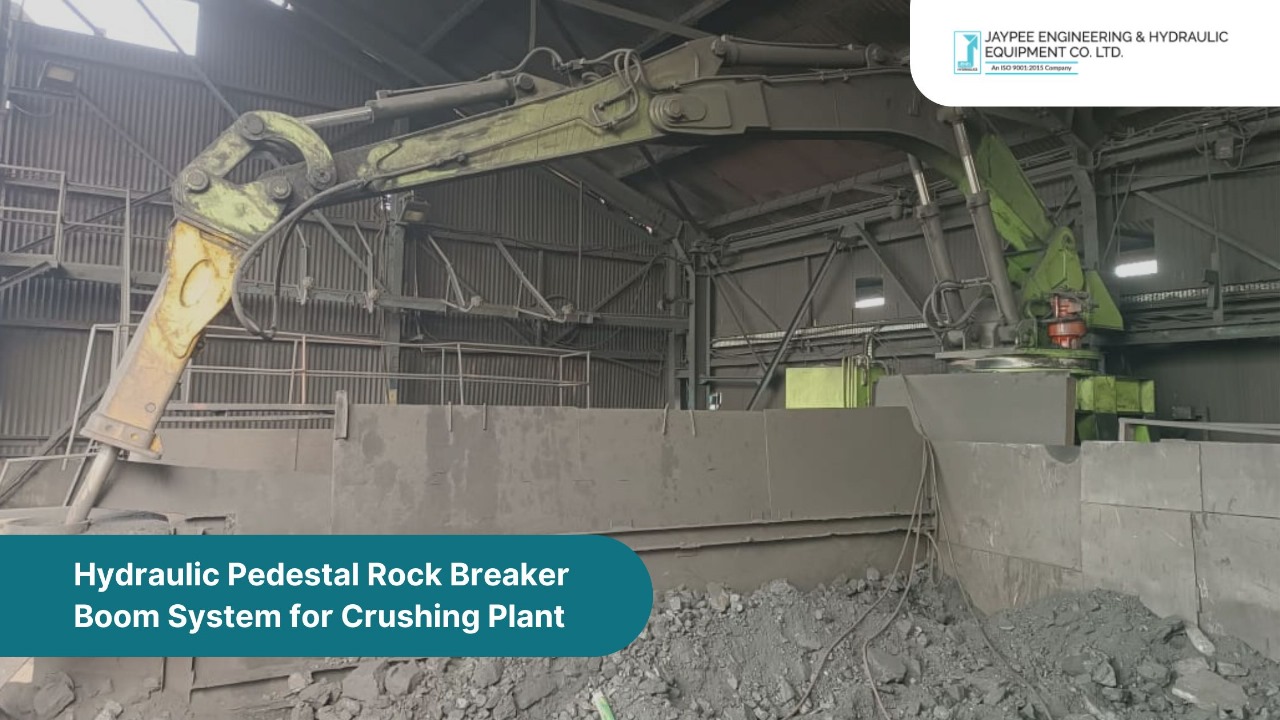
In the unforgiving environments of crushing plants, productivity often hangs by a thread—specifically, the size of the rock. When oversized boulders descend onto crushers unequipped to handle them, the result is an operational bottleneck, equipment wear, or worse—complete shutdown. It is here that the Hydraulic Pedestal Rock Breaker Boom System proves its mettle, transforming what was once a manual, hazardous interruption into a streamlined, automated response.
What is a Hydraulic Pedestal Rock Breaker Boom System?
A Hydraulic Pedestal Rock Breaker Boom System is a stationary hydraulic arm fitted with a powerful impact hammer. Typically installed above or beside the feed hopper of a crusher, it allows operators to break large, uncrushable rocks before they choke the crushing chamber. The system comprises several vital components: the base pedestal, an articulated boom, a hydraulic cylinder assembly, and the impact hammer itself. Modern systems feature remote-control operation, ergonomic interface panels, and durable steel architecture built to endure punishing work cycles.
These systems are seamlessly integrated into the design of primary crushers, allowing for automatic or operator-controlled engagement when oversized material is detected. They are not just mechanical arms—they are gatekeepers of efficiency.
Why Crushing Plants Need Rock Breaker Boom Systems
A crusher blockage is never an isolated incident—it triggers a cascade of losses. Conveyor belts come to a standstill, truck cycles are interrupted, and manpower is wasted. The Hydraulic Pedestal Rock Breaker is engineered to intervene precisely at this point of vulnerability. Its presence removes the necessity for workers to approach precarious crusher jaws with handheld tools—a practice fraught with danger and inefficiency.
By eliminating manual interventions, the system reduces the potential for workplace injuries and aligns crushing operations with global safety benchmarks.
Key Advantages of Hydraulic Pedestal Rock Breaker Systems
Reduced Downtime: Every second of halted operation carries a cost. With a rock breaker boom system in place, crushers can resume function within moments of a jam—no need for physical removal of rocks, no prolonged delays.
Operator Safety: Equipped with remote controls, these systems ensure that operators remain at a safe distance from the impact zone. This not only preserves human life but also minimizes liability.
Enhanced Equipment Life: Repeated stress on crusher jaws from overloading shortens the machine’s service life. A Hydraulic Pedestal Rock Breaker disperses this burden by fragmenting problematic material in advance, preserving the crusher’s internals and reducing unscheduled maintenance.
Cost Efficiency: From fewer shutdowns to lower repair bills, the ROI on installing a hydraulic pedestal system becomes evident within months. Long-term savings also stem from reduced damage to belts, chutes, and bearings.
Design Considerations and Customization Potential
No two crushing plants are the same, and neither should their pedestal rock breaker systems be. Factors such as boom length, hammer weight, swing angle, and cylinder stroke must all be evaluated in context. The size and abrasiveness of the rock, the height of the hopper, and the reach of the crusher all dictate how the system is configured.
Customization can also extend to automated integration with detection sensors, allowing the system to engage only when obstructions are identified—adding a layer of intelligence to brute strength.
Operational Efficiency and Maintenance
While the system is rugged, it is not immune to wear. Regular inspections of hydraulic lines, pin joints, hammer condition, and control systems are necessary. Lubrication schedules should be strictly adhered to, especially in dusty, corrosive environments. A properly maintained Hydraulic Pedestal Rock Breaker can perform relentlessly across years, maintaining the integrity of both itself and the crushing line it supports.
Industries and Applications
Though a staple in mining and quarry operations, Hydraulic Pedestal Rock Breakers are also making inroads into cement production facilities, coal handling plants, and power stations. In any setting where large, unwieldy material threatens operational flow, these systems bring precision and predictability. They serve not only as breakers of stone—but as enablers of industrial continuity.
Conclusion
In a world increasingly driven by uptime, speed, and safety, the Hydraulic Pedestal Rock Breaker Boom System emerges as a foundational element of modern crushing plant infrastructure. Its ability to intercept blockages, protect machinery, and safeguard personnel makes it not just a tool, but a strategic asset. As crushing plants evolve toward higher capacities and smarter automation, the hydraulic pedestal rock breaker will remain an essential force of controlled impact.
Frequently Asked Questions About Hydraulic Pedestal Rock Breaker Boom Systems
1. What is a hydraulic pedestal rock breaker boom system?
A hydraulic pedestal rock breaker boom system is a stationary hydraulic arm fitted with an impact hammer, installed near crushers to break oversized rocks and prevent blockages.
2. Why are rock breaker boom systems important in crushing plants?
They prevent crusher jams, reduce downtime, protect equipment from damage, and eliminate the need for dangerous manual rock removal.
3. How does a hydraulic pedestal rock breaker improve safety?
The system allows remote-controlled rock breaking, keeping operators at a safe distance from crusher jaws and high-risk impact zones.
4. What are the main components of a pedestal rock breaker system?
The system typically includes a pedestal base, articulated boom, hydraulic cylinders, impact hammer, and remote-control or automated operating system.
5. Can pedestal rock breaker systems be customized?
Yes, they can be customized based on boom length, hammer size, swing angle, crusher height, and material characteristics to match specific plant requirements.
6. Which industries use hydraulic pedestal rock breakers?
They are widely used in mining, quarrying, cement plants, coal handling facilities, and power stations.
7. How do these systems reduce maintenance costs?
By breaking oversized rocks before they enter crushers, they reduce stress on crusher components, minimize wear and tear, and prevent costly breakdowns.
8. What maintenance is required for a hydraulic rock breaker boom system?
Regular inspection of hydraulic lines, lubrication of joints, checking hammer wear, and monitoring control systems ensure long-term performance and reliability.