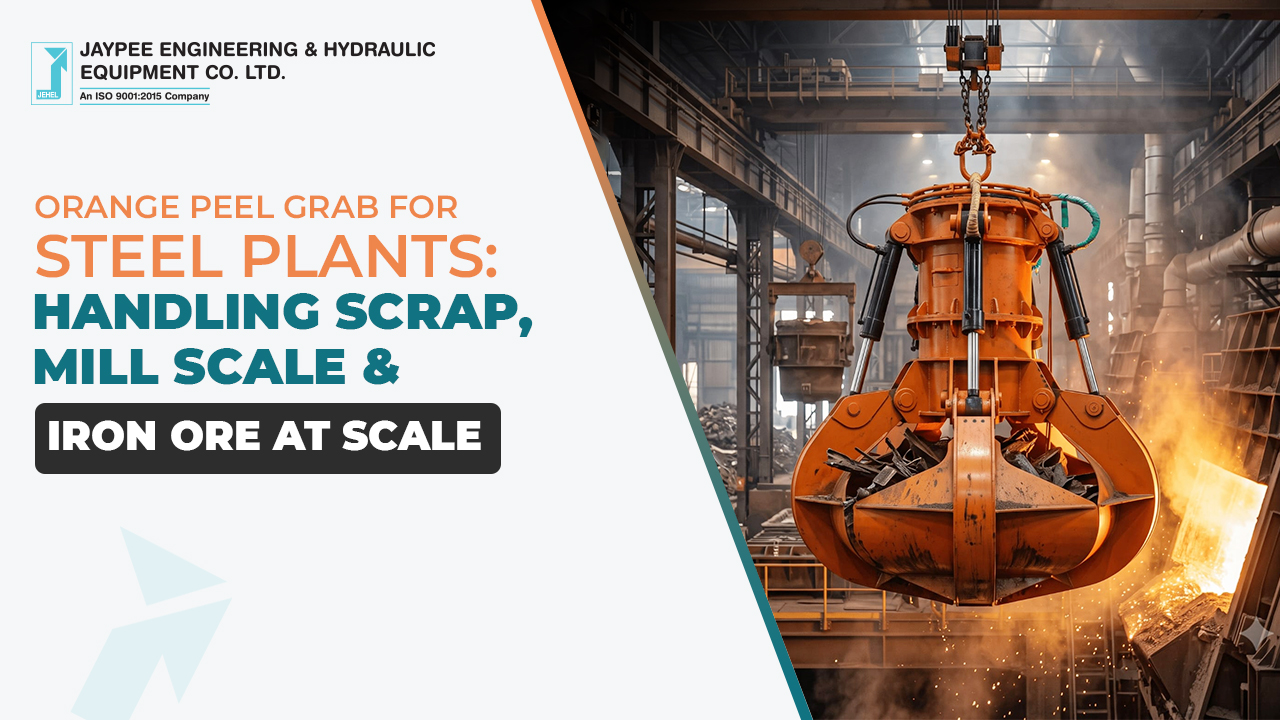
In a steel plant, there are production schedules that require high efficiency in handling materials. There are tonnes of scrap metal, mill scale, iron ore, and other materials that need to be moved from one place to another. Any inefficiency witnessed during handling the materials will hamper the production process.
In traditional handling methods, there are problems encountered with the handling of irregular scraps, heavy loads, and operating cycles that go on endlessly. Hence, an orange peel grab is useful in handling such a situation in a steel plant. Material handling needs improvement and less involvement of manpower. But not all materials need the same grab. Therefore, it is important to know the features of various industrial grabs.
Why Is Material Handling a Major Challenge?
There is variation in terms of density, shape, and handling of materials in steel manufacturing. The scrap metal might include rods, structural sections, and irregularly shaped scraps, whereas the mill scale and iron ore would mostly include fine materials.
The above differences pose many challenges such as:
- Uneven loading: The scrap metals make it difficult to have even loads using normal equipment.
- Material loss: The inability to grip properly might result in material loss.
- Longer handling cycles: The difficulty in lifting causes delays and reduces efficiency.
- Maintenance: Frequent use of abrasive materials leads to maintenance issues.
- Safety issues: Manually intervening in lifting loads and scrap materials poses safety risks.
Using the right grab attachments resolves these issues without making the material handling process too complicated.
Working of Orange Peel Grab in Steel Plant Operations
An orange peel grab is alternatively referred to as a polyp grab and works using curved tines that are either opened or closed on different objects. Whereas a regular mechanical grab relies on cable operated mechanisms to operate the tines, an electro-hydraulic orange peel grab relies on hydraulic power.
Operating this kind of equipment occurs through four major steps:
- The crane lifts the open grab above the materials.
- The tines are lowered around the scrap pile.
- Hydraulic cylinders force the tines to close.
- The crane lifts the material to the desired place.
This kind of operation is ideal for handling heavy melting scrap, tangled metals, structural steel, and industrial scrap. Proper integration of this machinery with the crane is necessary for repetitive lifting in challenging steel plant environments.
Handling Scrap, Mill Scale, and Iron Ore: Being Familiar With the Differences
Since steel mills deal with all three types of materials, their physical properties decide which grab system works well.
1. Scrap Metal: The Major Use of Orange Peel Grab Attachment
Steel scrap poses great difficulties in handling due to its varied sizes, shapes, and weights. A multi-pronged orange peel grab attachment can hold scrap that may not be easily contained by the standard bucket grabber. It proves handy in moving scrap metal from storage locations to processing places and furnace charge preparation sites.
The attachment could be useful in gaining better operational control by:
- Holding scrap pieces securely that have different shapes.
- Minimizing manual positioning of scrap.
- Making lifting and dumping operations more efficient.
- Utilizing available crane systems.
Undoubtedly, the right configuration is based on operating conditions, bulk density, and scrap dimensions.
2. Mill Scale: Selecting The Appropriate Grab Configuration
When steel processing generates mill scale, it consists of tiny, abrasive, and dense particles. This is because these particles can escape through openings created between open tines, which makes a conventional orange peel grab less effective when handling loose mill scale.
The clamshell hydraulic grab tends to work better in this case owing to its enclosed bucket configuration that allows better retention of materials. In cases where the mill scale has larger agglomerates or scrap within it, it is necessary to determine whether a polyp grab is appropriate.
3. Iron Ore: Handling Dense Bulk Materials
Iron Ore handling is incomplete without equipment that accommodates better material density and repeated loading cycles. When it is about small lumps and loose iron ore fines, clamshell grabs are an appropriate choice due to their efficiency in collecting and holding bulk materials.
There is an option of using the hydraulic or mining grab attachment when large-sized and irregular rocks are handled. Choosing equipment according to the material type minimizes spills, overloading, and unnecessary wear.
Difference Between Orange Peel Grab and Coal Handling Grab
Steel plants often handle various raw materials within the same facility. Using a single attachment for each application reduces handling efficiency.
An orange peel grab is designed to grip irregular, bulky materials. Its multiple tines surround objects rather than scooping them into an enclosed compartment.
By contrast, a coal handling grab uses a clamshell design and is suited for gathering loose, granular materials.
This difference is crucial because coal, iron ore fines, and mill scale require greater material containment, whereas irregular steel scrap requires proper gripping. Facilities that handle both materials may benefit from using appropriate grab systems for each task.
Selecting The Proper Hydraulic Grab for High-Volume Steel Plants
Choosing an industrial grab not only involves differentiating the equipment dimensions. Plant operators need to take into account material features, crane compatibility, and operating conditions. These are the factors to consider when selecting the proper hydraulic grab for high-volume steel plants:
Grab Capacity and Material Density
The range of an electro-hydraulic orange peel grab is normally 0.3 m³ to 1.5 m³. Volume is not the only factor to analyze lifting capacity. The grab weight, material density, and safe working load of a crane are analyzed together.
Crane Mounting compatibility
It is better to configure an orange peel grab for different lifting arrangements. It includes:
- EOT Cranes: Applicable for ongoing scrap movement within steel manufacturing units.
- Stationary Cranes: Helpful at fixed material handling sites.
- Mobile Cranes: Best for operations that never go well without movement between handling areas.
The mounting arrangement should align with the operational needs and the unit’s layout.
Hydraulic System Reliability
Each hydraulic machine utilized in ongoing industrial operations is incomplete without dependable components. Cylinder quality, hose routing, and hydraulic pressure control have an impact on the reliability of equipment. Regular inspections can detect wear before it results in unexpected loss.
Tine Design and Durability
Tine geometry has a relevance in gripping performance. Based on the scrap size and material features, you need to consider open or more enclosed configurations. When it comes to abrasive steel plant atmospheres, wear-resistant components and heavy-duty construction take centre stage.
Final Thoughts
Therefore, to ensure productivity in contemporary steel plants, it is mandatory to opt for efficient material handling. Irregular steel scrap can be handled with orange peel grabs. On the other hand, granular materials require specialised clamshell grabbing. The appropriate equipment enhances material retention and reduces unnecessary handling delays.
JEHEL provides electro-hydraulic orange peel grabs in various capacities, stationary, EOT, and mobile crane-mounted configurations, as well as clamshell grabs for managing bulk materials. The company has in-house engineering solutions and tailor-made manufacturing. This is how it can help industrial facilities choose materials according to their operational needs and requirements.