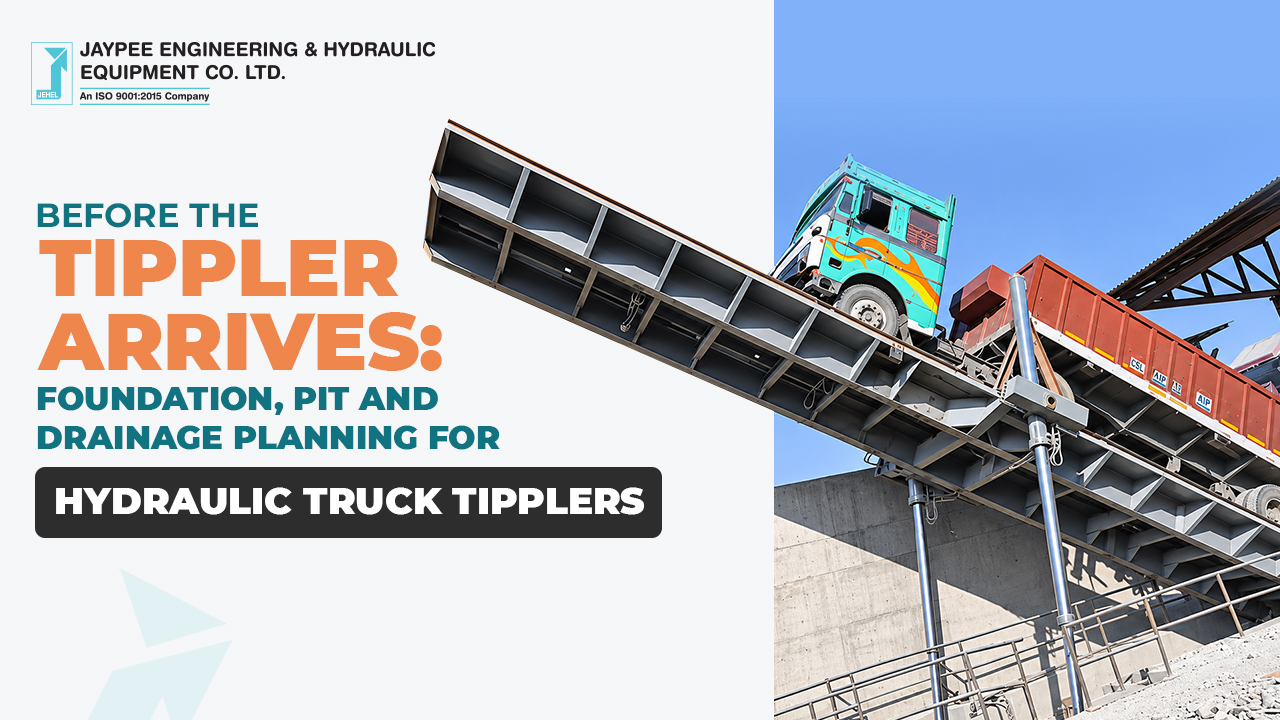
The tippler is on the trailer, the OEM team has arrived, the crane is rigged, and the site engineer is holding a drawing that doesn’t match what’s in the pit. It happens more often than anyone wants to admit. The equipment showed up on schedule. The civil work didn’t.
Most tippler installation delays in Indian plants trace back to the same handful of civil issues: foundation geometry that doesn’t match the final equipment drawing, pit depth that assumed the wrong tilt angle, and drainage that was added as an afterthought and floods the pit during the first monsoon. Each of these is preventable. Each one gets missed anyway.
This guide walks through what needs to happen before your Hydraulic Truck Tippler arrives on site. Not the generic version from the OEM manual. The practical version that accounts for how Indian plant sites actually behave, from soil variability to monsoon drainage to coordinating multiple civil contractors.
Foundation: Getting the Base Right from the Start
A tippler foundation isn’t just about compressive load. It carries cyclic loads from tilt-and-return cycles, plus horizontal thrust when a loaded truck rolls on and off. Sites that pour foundations like they would for a static silo often see cracking within the first six months of operation.
Three practical rules save most of the pain:
- Confirm soil bearing capacity with a fresh geotech report, not an assumption from the adjacent silo foundation.
- Size the foundation for the final rated tilt angle and the heaviest truck class, not the ‘typical’ one.
- Include anchor bolt templates in the civil package. Field-drilling anchors after the pour is the single biggest cause of commissioning delays.
Pit Geometry: Planning for the Right Fit
The pit houses the tilt platform, the hydraulic power pack access, and the discharge hopper that feeds the conveyor or crusher downstream. Getting its geometry right means working backward from the discharge point, not forward from the truck approach.
For most Indian plants running a hydraulic truck tippler on bulk materials like coal, limestone, or bauxite, the pit depth has to accommodate the full travel of the tilt platform at maximum angle plus the discharge chute geometry. Skimp on either and you’ll either lose material to spillage or restrict tipple angle, which cuts unloading efficiency.
Drainage: Planning It In from Day One
Drainage is the item most often added on-site after the pit is already poured. It’s also the single most common reason tippler pits fail during the first monsoon. Standing water in the pit corrodes the hydraulic lines, shorts the control electrics, and triggers warranty disputes that nobody wants.
A proper drainage spec includes:
- A sump at the lowest point of the pit sized for peak monsoon inflow plus wash-down water.
- Submersible pumps with automatic level control, not manual activation.
- A separate storm-water drain that diverts runoff away from the pit entrance.
- An oil-water separator if the plant specification requires it for environmental compliance.
Coordination: Smooth Handoffs Between Trades
The tippler install involves at least three contractor groups: civil for the foundation and pit, mechanical for the equipment erection, and electrical for the power supply and control integration. The handoff points between them are where most schedule slippage actually happens.
Plants that run smooth installations typically assign a single engineering lead who signs off on each handoff before the next trade starts. It sounds obvious. It rarely happens by default. Without that coordination, the electrical contractor arrives to find no cable trench, or the mechanical contractor finds anchor bolts in the wrong pattern.
The Pre-Arrival Checklist That Sets You Up for Success
Before the equipment physically arrives on site, run through this short list. It’s not complete, but it covers the items that most often get missed:
- Final equipment general arrangement drawing matched against as-built civil.
- Anchor bolt template installed and verified before concrete pour.
- Pit drainage sump pump installed and tested dry and wet.
- Power supply available at the control panel location, not just near it.
- Access for crane positioning cleared and ground condition verified.
- Storage area for the hydraulic power pack and control cabinet confirmed.
Conclusion
A tippler install goes smoothly when the civil work treats the equipment as a precision installation, not as another foundation pour. The difference between a two-week commissioning and a two-month commissioning is almost always decided before the truck carrying the equipment leaves the factory.
The best time to catch civil-mechanical misalignment is during the design review, not during the equipment unloading. Insist on a joint drawing review between your civil consultant, the OEM, and your site team before concrete is poured. The extra half-day of coordination saves weeks of rework.
If you’re planning a tippler installation at your plant, JEHEL provides design-stage support for the civil package alongside the hydraulic truck tippler itself, with site engineers who have seen most of the common pitfalls at Indian plant sites. Reach out to the JEHEL team early in your project, and they’ll help your civil team get the foundation, pit, and drainage right the first time.
Frequently Asked Questions
Q1. Why does a tippler foundation need special design?
It carries cyclic loads from every tilt cycle plus horizontal thrust when a loaded truck rolls on and off. It is not a static silo foundation. Size it for the heaviest truck class at the full rated tilt angle.
Q2. Do I need a fresh geotech report for the tippler location?
Yes. Soil bearing capacity can vary across short distances. Do not reuse data from an adjacent silo or building foundation. A fresh report at the actual tippler location is cheap insurance against later cracking.
Q3. How is pit depth decided?
Work backward from the discharge point, not forward from the truck approach. The pit must accommodate the full tilt angle plus the discharge chute geometry feeding the downstream conveyor or crusher.
Q4. Why does tippler pit drainage matter so much?
A flooded pit corrodes hydraulic lines, shorts control electrics, and voids warranties. Plan a sump sized for peak monsoon inflow, submersible pumps with auto-level control, and a separate storm-water diversion from day one.
Q5. What is the most common civil mistake plants make?
Field-drilling anchor bolts after the concrete pour. This is the top cause of commissioning delays. Install and verify the anchor bolt template before the pour, not after.