The equipment itself does not cause bulk material handling managers to experience sleepless nights, according to their responses. The hidden cost that accumulates without notice creates operational problems, which include slow cycle times, labor overruns, unplanned breakdowns, and material lost to spillage. The actual financial impact on operations comes from these expenses, which do not appear on purchase invoices.
You need to begin your cost discussions for clamshell grab bucket operations at their starting point. Not at the sticker price, but at the full picture. The three-to-five-year evaluation period shows that actual costs become visible when you assess all expenses associated with labor and maintenance, operational interruptions, and production capacity.
The study analyzes modern hydraulic clamshell system costs, which compare with traditional methods, while it identifies the equipment upgrade factor that drives Indian industrial growth and the bulk handling equipment evaluation methods, which help maintain operational efficiency and budget protection.
What Is a Clamshell Grab Bucket and Why Does the Cost Conversation Matter?
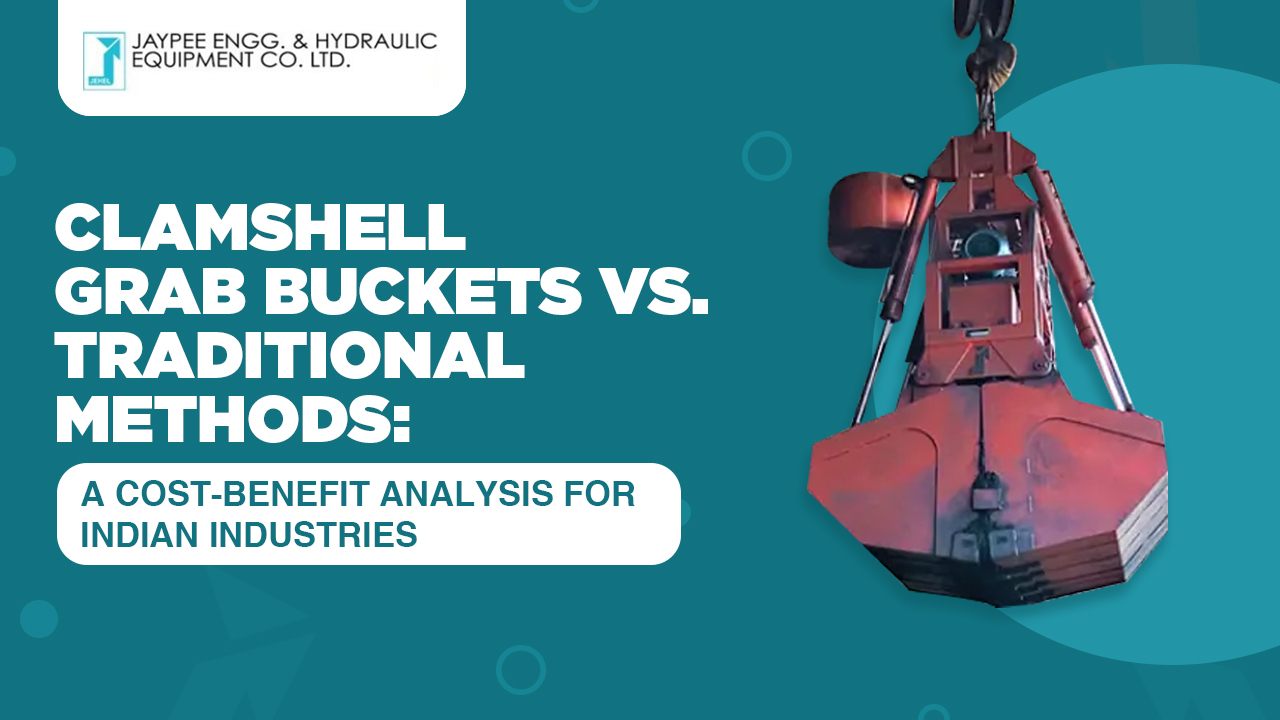
A clamshell grab bucket serves as a hydraulic and mechanical device that cranes, excavators, and overhead gantry systems use to scoop, lift, and move loose bulk materials. Its two symmetrical shells open wide, bite into a material pile, and close to secure the load. The design functions effectively with various materials, which include coal, limestone, sand, scrap metal, and grain.
The reason the clamshell grab bucket cost gets serious attention in procurement discussions is that its essential function requires assessment of its performance during actual use. The attachment functions as the central point that determines how much weight the crane can move. Any inefficiency there multiplies across every cycle, every shift, every month of operation.
The entire system functions properly when organizations select the correct equipment. Organizations must spend multiple years to make up for their wrong decisions.
What the Market Is Telling Operators
The global material handling equipment market was valued at USD 252.53 billion in 2025 and is projected to reach USD 390.88 billion by 2032, growing at a CAGR of 6.4%.
The rate of development in India is currently increasing at a faster rate. Industrial operators are required to adopt advanced equipment because of three factors, which include port modernization projects, steel capacity expansions, and government infrastructure investments.
Facilities that delay their equipment upgrades face competition from operations that transport greater amounts of goods using fewer employees while spending less money to move each tonne of cargo. The distance between them continues to grow larger with each passing year.
Clamshell Grab Bucket Cost vs. Traditional Methods: What the Numbers Actually Show
The honest comparison isn’t purchase price versus purchase price. The entire operating expenses throughout the equipment’s life will determine the actual value of the equipment.
Labor and Productivity
The manual bulk handling operations demand full workforce deployment throughout their operational hours across all seven days of the week. The total expenses for three to five years of operation exceed the complete ownership expenses of a hydraulic clamshell system when I calculate wages and supervision expenses, safety regulations, and the production decline caused by human handling differences.
The contemporary hydraulic grab system operates at multiple high-capacity cycles throughout each hour while maintaining stable fill rates. The system operates continuously without experiencing fatigue, requires no rest periods, and prevents haulage errors that result in load spills and incomplete loads. The value of that operational consistency proves to be highly valuable for companies that handle large volumes of work.
Maintenance and Unplanned Downtime
The use of rope-operated mechanical grabs, which represent older technology, experiences higher wear rates when they operate in environments containing abrasive materials. The operational system suffers damage to its sheaves and ropes along with its pivot points, which results in operational costs that extend beyond repair expenses when an equipment breakdown happens during work. The entire loading process lost work hours, which extended from the beginning until the end of unloading operations.
Hydraulic clamshell systems that meet industrial-grade specifications provide organizations with more dependable maintenance timing, which leads to extended periods between operational breakdowns. 3D engineering capabilities generate optimal designs because all structural components undergo testing against actual facility load conditions and environmental factors that will be experienced during operation.
The Real Gains from Upgrading
The installation of a hydraulic clamshell grab system decreases the required crane operations to transport a specific tonnage. The decreased number of operations results in reduced crane maintenance needs, decreased fuel usage, and faster loading times for trucks and railcars, which wait to be loaded or cleared.
The decrease in spillage from rope-operated and manual methods results in higher delivery accuracy for transported materials. Workers experience safer conditions when they stay away from material storage areas that are being worked on. The requirement for industrial safety audits brings significant importance to that particular aspect of operations.
What Operators Get Wrong When Evaluating Bulk Handling Equipment
The most common mistake is specifying a grab based on crane capacity alone without including the material requirements. The shell design needs to be determined by the material density, lump size, and abrasiveness properties, which will determine the needed closing force. A grab designed for coal handling will not operate in the same manner when used to handle dense iron ore or mixed scrap materials.
People tend to undervalue after-sales support as an essential service. The time needed for fault recovery depends on both spare parts availability and access to engineering support. The speed of operation throughout a machine’s operational period directly influences the actual expenses for clamshell grab bucket utilization.
Conclusion
The clamshell grab bucket expense functions as a performance measurement that extends throughout multiple years instead of existing as a single expense entry on a purchasing document. The correct system will deliver superior results when it matches your specific material requirements, together with your equipment specifications for lifting operations.
Jehel has dedicated years to developing hydraulic grab systems, which serve India’s steel industry, maritime operations, mining activities, and construction projects. The company’s internal research and development team, together with its 3D modeling capabilities, creates equipment that functions according to actual work needs rather than standard design requirements.
Your best option for determining the appropriate clamshell grab system expenses and operational benefits for your bulk handling equipment evaluation process exists through contacting Jehel to receive a personalized consultation. The numbers are worth seeing before you decide.