Most people hear demolition and picture a wrecking ball swinging into a building. Industrial demolition looks nothing like that. It happens inside cement kilns where accretion has fused to the refractory lining. Inside steel furnaces where the roof needs stripping. Inside chimneys where the brickwork is crumbling. In tunnels where the clearance barely fits a person, let alone a machine.
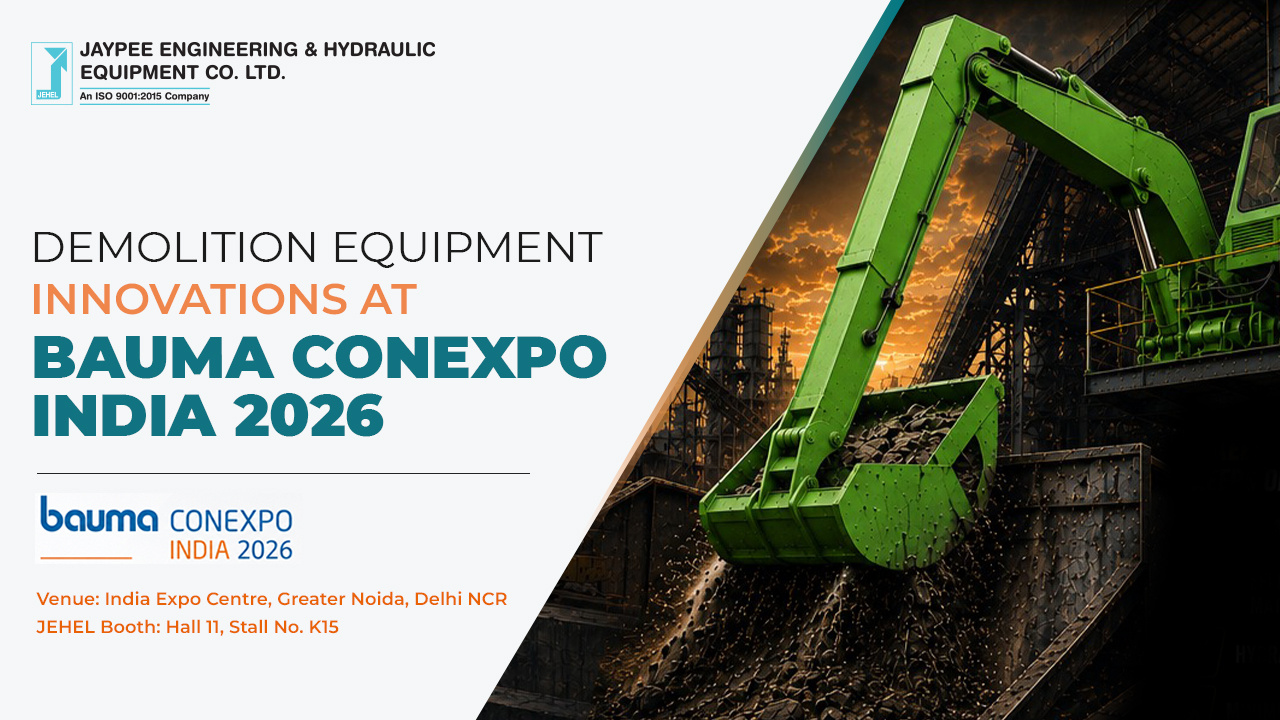
These are the jobs that demolition equipment at bauma CONEXPO 2026 is built for. And the machines doing this work have changed significantly in the last five years. They’re smaller, quieter, electric, and controlled from outside the danger zone. At the India Expo Centre, Greater Noida (15 to 18 September 2026), you’ll see these innovations on the exhibition floor.
Here’s what’s actually new in industrial demolition, why it matters for shutdown planning, and what to evaluate when you visit.
Electric Power Is Replacing Diesel in Confined Spaces
This isn’t a preference. It’s a necessity. Running a diesel engine inside a kiln, a furnace chamber, or a tunnel fills the space with exhaust fumes. Ventilation systems can manage it to a point, but they add cost, complexity, and risk. An electric demolition machine eliminates the problem.
JEHEL’s Boxer 35 and Boxer 50 have been electric from the start. But the broader industry trend is worth noting. More manufacturers are moving away from diesel-powered confined space machines. At bauma, compare which exhibitors offer electric as standard and which still treat it as an upgrade. That distinction tells you who’s designing for real site conditions.
Remote Operation Has Gone Wireless
Earlier generations of compact demolition machines used wired remote pendants. The operator stood outside the confined space but was tethered by a cable. It worked, but the cable length limited positioning, and the wire itself was a trip hazard on cluttered demolition sites.
Wireless remote control changes this. The operator can stand at a safe distance, move freely around the work area, and maintain line of sight from the best vantage point. Some systems now include camera feeds mounted on the machine, so the operator doesn’t even need direct visual access.
When evaluating demolition equipment at the exhibition, ask about the remote control range, the signal redundancy (what happens if the wireless link drops), and whether a camera system is available as an option.
Smaller Machines, Bigger Hammer Energy
This is the trend that matters most for shutdown contractors. Five years ago, fitting through a kiln manhole meant accepting a smaller hammer with less breaking power. You could get into the space, but the work took longer because each strike removed less material.
Better electric motors and more efficient hydraulic circuits have closed that gap. Today’s compact demolition machines deliver hammer energy that was once reserved for machines twice their size. The Boxer 50, for example, handles chimney teardown and thick concrete breaking that would have required a larger diesel unit in 2020.
At the booth, ask for the hammer energy rating in joules and compare it against the machine’s footprint. The best machines give you high energy per square metre of floor space occupied.
360-Degree Boom Swing Is Now Expected
Older compact breakers had limited swing angles. The operator had to reposition the entire machine to reach material on the opposite side. In a tight kiln interior or a narrow tunnel, repositioning means reversing, turning, and re-approaching. That costs time on every cycle.
A full 360-degree boom swing lets the operator break material in any direction without moving the chassis. It sounds like a small feature. In a four-day kiln shutdown where every hour counts, it’s the difference between finishing on schedule and requesting an extension.
Demolition Machines Are Crossing Into Material Handling
Here’s a trend that most visitors won’t expect to see. Compact demolition machines are starting to appear in material handling roles. Clearing hopper blockages. Breaking hardened material inside chutes. Removing build-up from conveyor transfer points. These are jobs that used to require manual labour, extended shutdowns, or improvised solutions.
A Boxer-type machine can enter the hopper through a maintenance opening, break the blockage, and exit. The plant resumes normal operation without a full shutdown. It’s an application that didn’t exist in the product category five years ago.
Debris Handling After Demolition
Breaking material is half the job. The other half is getting it out. Orange peel grabs mounted on cranes above the demolition zone can pick up broken concrete, rebar, and mixed debris as the Boxer works below. The two machines working in sequence turn a demolition job into a continuous cycle of break, lift, and clear.
Where to See It
- Event: bauma CONEXPO INDIA 2026
- Dates: 15 to 18 September 2026
- Venue: India Expo Centre, Greater Noida, Delhi NCR
- JEHEL Booth: Hall 11, Stall No. K15
- Timings: 10:00 AM to 6:00 PM (Sep 15-17), 10:00 AM to 5:00 PM (Sep 18)
Why This Matters for Your Next Shutdown
If you manage kiln turnarounds, furnace rebuilds, or structural maintenance at industrial facilities, the demolition equipment you select directly affects your shutdown duration. A machine that’s smaller, electric, remote-operated, and delivers more hammer energy per cycle shortens the job. That’s not a marketing claim. That’s physics and scheduling.
The exhibition is the right place to evaluate these machines side by side. Watch them operate. Compare the chassis dimensions against your access openings. Ask about hammer energy, boom reach, and power consumption. These are the numbers that determine whether the machine fits your next shutdown window.
JEHEL will have both the Boxer 35 and Boxer 50 at Hall 11, Stall K15. To discuss your demolition and shutdown requirements before the event, contact the team at +91 9051617609 or through jehel.com/contact.
SOURCES
- bauma CONEXPO INDIA 2024 data (984 exhibitors, 51,118 visitors): bcindia.com/en/trade-fair/data/numbers/