Every mining operation eventually faces the same costly disruption. The grizzly becomes blocked when an oversized boulder falls on it, which causes the crusher feed to choke and the alarms to activate while production comes to a complete halt. The process requires three seconds to occur, but needs three hours to fix. The teams enter dangerous areas while the essential machinery operates under extreme conditions that exceed its intended design capacity.
The system works by allowing trained operators to control equipment remotely. The system eliminates shutdowns because it allows operators to handle oversized rock before it reaches the primary crusher or grizzly feeder. The equipment operates to maintain system functionality while protecting workers from danger.
The blog demonstrates the necessity of hydraulic breakers in contemporary mining operations while showing the actual expenses that arise from crusher blockages and explaining how the correct setup of a Hydraulic Rock Breaker for Mining system ensures safe and continuous operation of the crushing line.
What Is a Hydraulic Rock Breaker for Mining Operations?
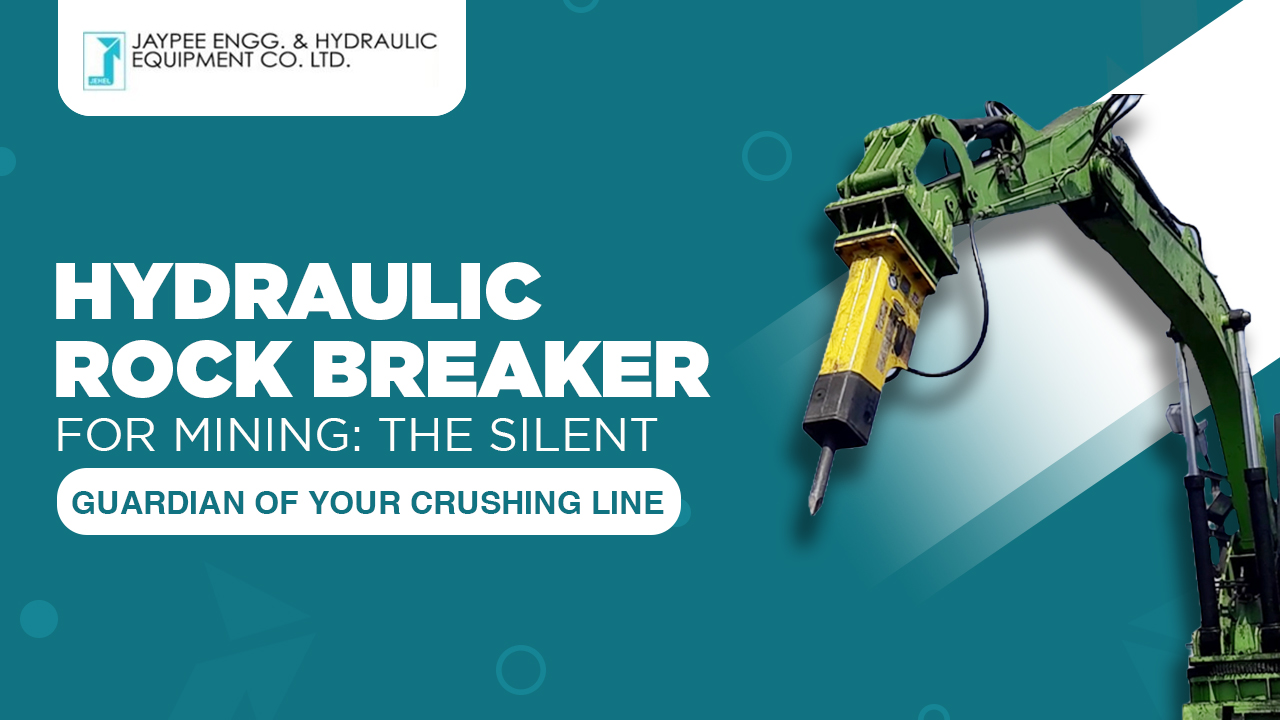
A hydraulic rock breaker in mining operates through a boom system, which uses pedestal mounting together with a high-impact hammer. The system functions as a permanent fixture that provides access to the crusher feed area. When the operator receives oversized rock material from blasting operations, the operator uses the remote control panel to move the boom equipment and break the rock into smaller pieces, which will proceed to the crusher.
Remote functionality ensures safety by allowing workers to clear blockages without entering hazardous areas. The operator works from a secure location while the obstruction is cleared quickly and efficiently. The system requires this capability to operate at its maximum performance level.
The system functions as the main protection mechanism that safeguards all crushing equipment in the entire crushing circuit.
Why Mining Equipment Investment Is Increasing in 2025 and Beyond?
The global mining equipment market keeps growing because mineral demand keeps increasing. The global mining equipment market will reach USD 173.2 billion by 2032, according to a 2025 industry update from Fortune Business Insights, because infrastructure development and vital mineral requirements will drive market growth.
India requires its mines to work at full capacity because of increased infrastructure investments and rising mineral output. The primary crushers experience greater operational demands as their throughput capacities increase.
The Hydraulic Rock Breaker for Mining functions as a fundamental requirement under these circumstances. The system enables ongoing material movement while safeguarding valuable crushing equipment during high-demand operational periods.
How a Hydraulic Rock Breaker Eliminates the Primary Bottleneck?
Crusher blockages remain one of the leading causes of unplanned downtime in mining operations. The primary crusher experiences choke points when oversized rock fragments bypass blasting controls.
The installation of a Hydraulic Rock Breaker for the mining system at the feed point enables operators to stop oversized materials, which would lead to a complete system shutdown. The site establishes procedures to stop blockages from developing into more serious issues.
The result of this process leads to stable throughput operations, decreased mechanical stress, and improved forecasting of daily output results.
The Real Financial Impact of Crusher Downtime
The financial impact of unplanned downtime becomes measurable for businesses. The 2025 reliability and asset performance study by ABB shows that mining sites face unplanned downtime costs that reach hundreds of thousands of dollars per hour when businesses lose production and incur recovery expenses.
Both aggregate and mineral mining operations suffer ongoing financial losses from even brief production stoppages. The process of dealing with blockages involves shutting down operations, which requires both clearing the blockage and conducting equipment inspections before restarting the system. The system experiences major production losses because these events repeat themselves throughout the week.
The practice of repeated shock loading leads to faster deterioration of crusher liners, bearings, and drive assemblies. The system experiences both more frequent maintenance requirements and increased expenses for equipment replacement.
The processing site uses secondary blasting to break oversized rocks that are located close to the crusher area. The procedure causes two problems because it creates delays in operations and requires adherence to regulatory standards while introducing new safety risks. The operational problem gets solved through the use of a stationary hydraulic breaker, which enables the crushing process to continue without stopping the entire system.
Engineering Built for Mining Conditions
Mining operations require equipment that can withstand dust, vibration, impact, and extended operation.
The design of a stationary breaker system requires a reinforced pedestal that can withstand multiple hammer impacts. The boom geometry is designed to provide full coverage of the crusher feed opening. The selection of hammer energy rating depends on two factors: maximum rock size and material hardness.
Each installation must be configured to match the crusher dimensions and site layout. The system experiences efficiency loss and new stress points when equipment is improperly sized.
The breaker operates as an integrated extension of the crushing line when it receives proper implementation.
The Reality of Blast Fragmentation Variability
No blast produces identical fragmentation. Rock sizes display inconsistent patterns because of differences in geological conditions, drilling accuracy, and moisture levels. The presence of oversized boulders creates operational challenges for mining operations.
The crushing system requires the implementation of automatic response systems for its design process.
The hydraulic breaker operates nonstop at its fixed position to handle oversized materials that arrive at the site. The system maintains continuous operation by eliminating potential blockages through active material handling.
Selecting the Right Hydraulic Rock Breaker for Mining
The two essential factors for system selection need to be understood before starting the selection process. The maximum expected rock size and the hardness of the material determine the required hammer energy class.
The dimensions of the crusher feed opening and the available installation space both affect the required pedestal height and boom reach. The unique layout limits of every mining site make site evaluation necessary for all locations.
The process of commissioning needs to be done according to proper procedures, while all equipment needs to be aligned correctly. The Hydraulic Rock Breaker for Mining system will function properly during its entire operational life when it receives correct installation, but improper setup causes decreased performance and faster component deterioration.
Conclusion
The hydraulic rock breaker functions as more than an auxiliary machine because it serves as the main protective system for the primary crusher. The system breaks blockages before they develop into larger problems, which results in improved safety and constant material flow and equipment protection.
As mining operations scale up production capacity beyond 2025, investing in the proper Hydraulic Rock Breaker becomes increasingly critical.
If crusher blockages are disrupting your production, JEHEL can help. JEHEL will evaluate your site conditions to assist you in selecting the optimal hydraulic breaker setup that protects your crushing operations.