Large industrial projects rarely move at the pace of a brochure timeline. The order gets placed, drawings go back and forth, materials move through fabrication, site readiness takes its own schedule, and at some point further down the road the equipment finally runs for the first time under full plant conditions. That journey, from signed PO to successful commissioning, is often where the real work lives.
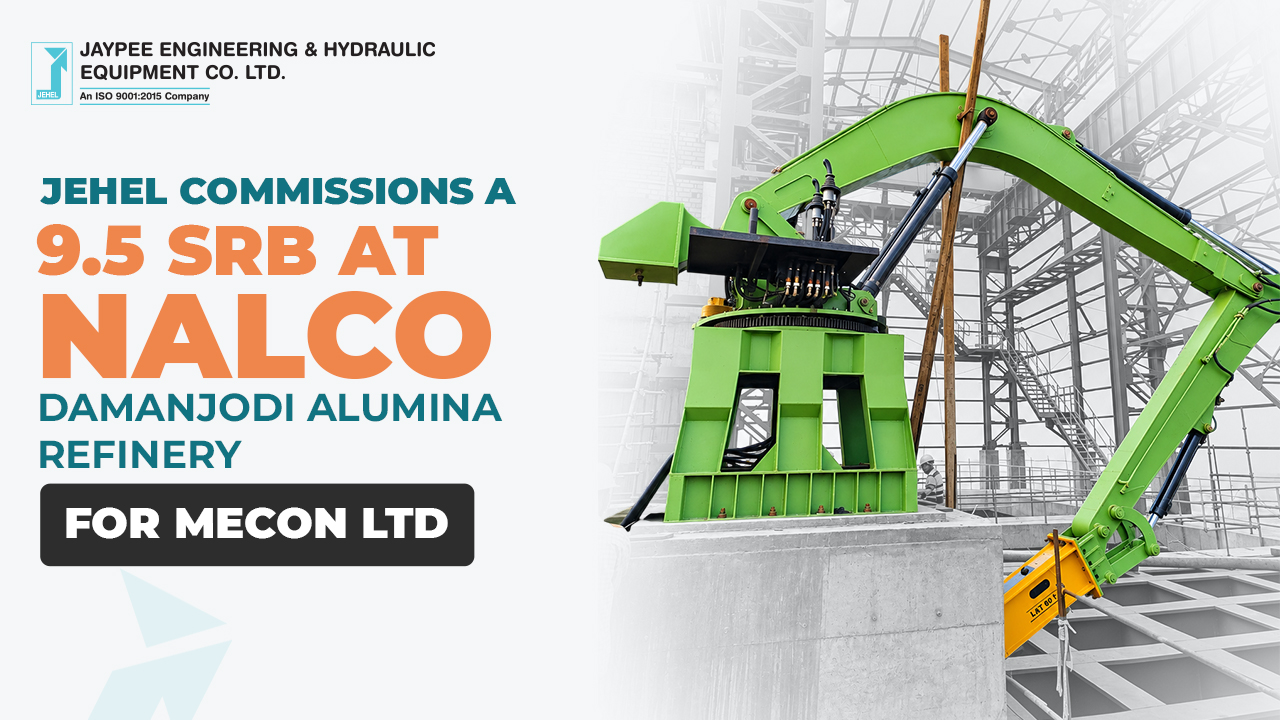
For JEHEL, one such journey came to a close on 24th July 2026, when we completed the commissioning of a 9.5 Stationary Rock Breaker at the NALCO Damanjodi Alumina Refinery in Odisha. The order had been placed with us by Mecon Ltd. a few years earlier, and the project moved steadily from engineering through to on-site operation across that period.
This post is a short account of the project, the role the SRB will play at the plant, and a note of thanks to the teams at Mecon and NALCO who made the installation possible.
The Project at a Glance
NALCO’s Damanjodi complex is one of the country’s established alumina refining facilities, with a captive power plant rated at 92.5 MW supporting its operations. For a plant of this scale, oversize material at the feed point is a recurring operational concern. Allow enough oversized lumps to reach the primary crusher, and the whole downstream circuit slows down. Clear them reliably at the grizzly, and the plant keeps feeding at its designed rate.
That is the job the 9.5 Stationary Rock Breaker has been commissioned to do. The unit was supplied through Mecon Ltd., as part of the wider project scope at Damanjodi.
What the SRB Does at the Plant
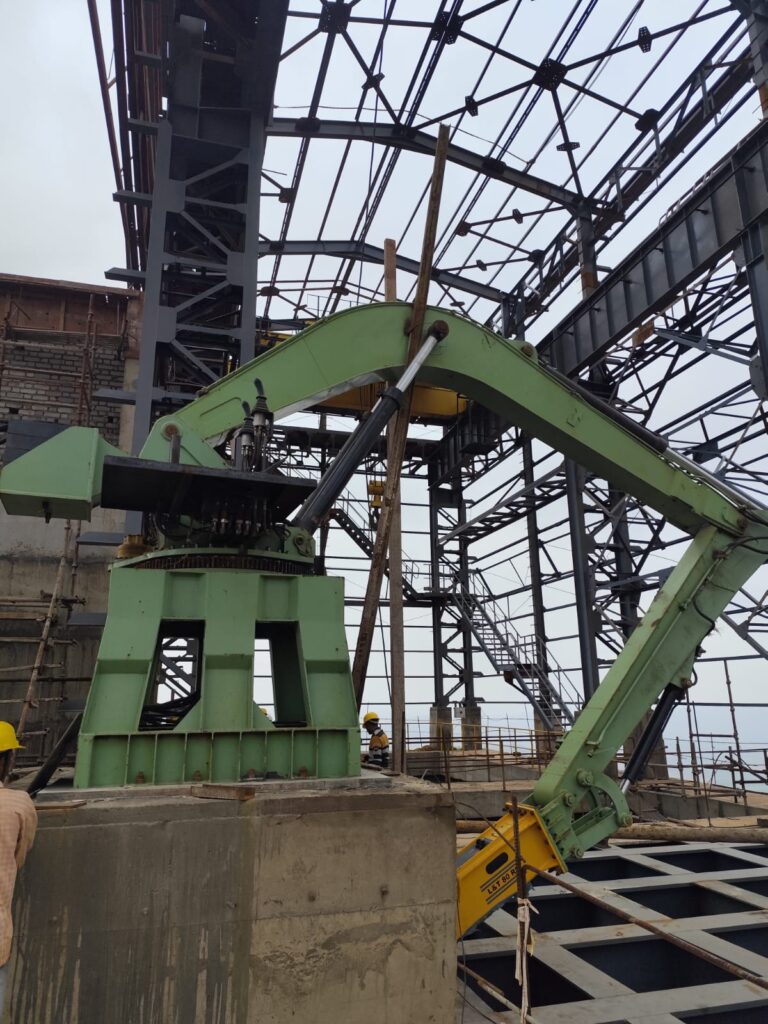
In practical terms, the 9.5 SRB sits over the grizzly feed and takes on oversize material in place, so that the plant does not need to stop the feeder or send crews to clear boulders manually. The benefits it is designed to deliver at site include steadier feed to the downstream crusher, reduced manual intervention at the oversize clearing point, safer working conditions around the grizzly, and more predictable production output over long operating hours.
None of this is new in principle. What matters in each installation is that the sizing, boom reach, hydraulic specification, and mounting arrangement actually match the plant’s working conditions. For the Damanjodi project, those details were worked through with Mecon and NALCO over the course of the project.
The Project Journey
From order placement a few years back to the commissioning in July 2026, the SRB passed through the stages that any major installation of this type goes through: engineering and drawing finalisation, manufacturing at our Kolkata facility, inspection and dispatch, site erection, and finally on-site testing and commissioning. Projects of this scale are rarely delivered end-to-end by one team, and this one was no exception.
The successful commissioning is the result of coordinated work between our engineering, manufacturing, dispatch, erection, and site commissioning teams at JEHEL, alongside the project teams at Mecon Ltd. and the site team at NALCO Damanjodi. We are grateful to both for their cooperation throughout the full duration of the project.
Why This Installation Matters to Us
Every commissioning adds to the operating reference base that a manufacturer like JEHEL can draw on for future projects. A unit running satisfactorily at a plant of NALCO Damanjodi’s scale is a valuable reference, not because of marketing value, but because it gives our engineering team one more real-world data point for how the equipment behaves in a particular operating environment.
It is also a reminder that the work does not end at commissioning. The commissioning date is the beginning of the equipment’s working life, not the end of the project. Our service team continues to support the installation through the warranty period and beyond, and that long tail of after-sales support is as much a part of what we deliver as the SRB itself.
Thank You to the Teams Involved
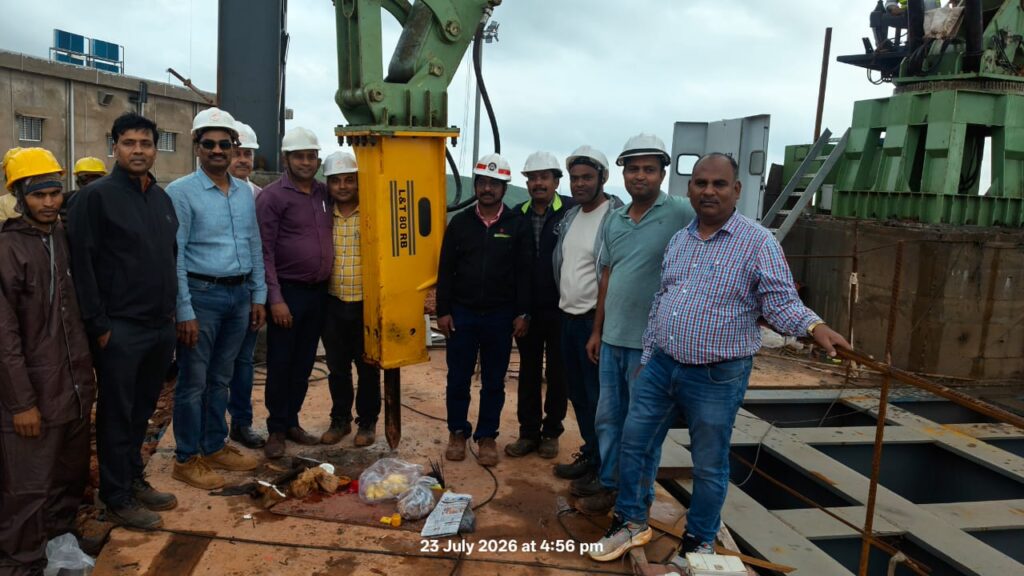
We would like to record our thanks to Mecon Ltd. for selecting JEHEL for this scope of supply and for the steady professional engagement maintained through the full duration of the project. We also thank the management and site team at NALCO Damanjodi Alumina Refinery for their cooperation during the installation and commissioning phase.
Credit also goes to every member of the JEHEL team, from the design office to the shop floor to the engineers who travelled to site, whose patience and technical work carried the project from order confirmation through to a successful commissioning in July 2026.
Looking Ahead
The Damanjodi commissioning takes its place alongside other installations where JEHEL rock breaking, truck tippling, and material handling equipment is in daily service at Indian industrial sites. Our focus continues to be the same as it has been since 1995: reliable equipment built for Indian operating conditions, backed by service that is actually reachable when it is needed. If this installation serves NALCO well in the years ahead, that will be the measure of the project’s success.
Frequently Asked Questions
Q1. What is a 9.5 Stationary Rock Breaker?
A hydraulically operated percussion unit mounted on a fixed pedestal above a grizzly. The 9.5 refers to the specific model class in JEHEL’s SRB range. It breaks oversize material at the feed point before it reaches the crusher.
Q2. Where was this SRB commissioned?
At the NALCO Damanjodi Alumina Refinery in Odisha. The project was executed for Mecon Ltd., with commissioning completed on 24th July 2026.
Q3. What does the SRB do at the plant?
It sits above the grizzly and breaks oversize material in place. This keeps the feeder running, reduces manual intervention at the clearing point, and supports steadier feed to the downstream crusher.
Q4. Why was JEHEL selected for this project?
JEHEL has been designing and manufacturing stationary rock breakers and hydraulic material handling equipment for Indian industrial sites since 1995, with an established working relationship with Mecon Ltd. and an operating reference base across the alumina, cement, steel, mining, and power sectors.
Q5. What support continues after commissioning?
JEHEL’s service team continues to support the installation through the warranty period and beyond. Commissioning is the start of the equipment’s working life, not the end of our involvement.